
Common Dental Problems and How to Prevent Them
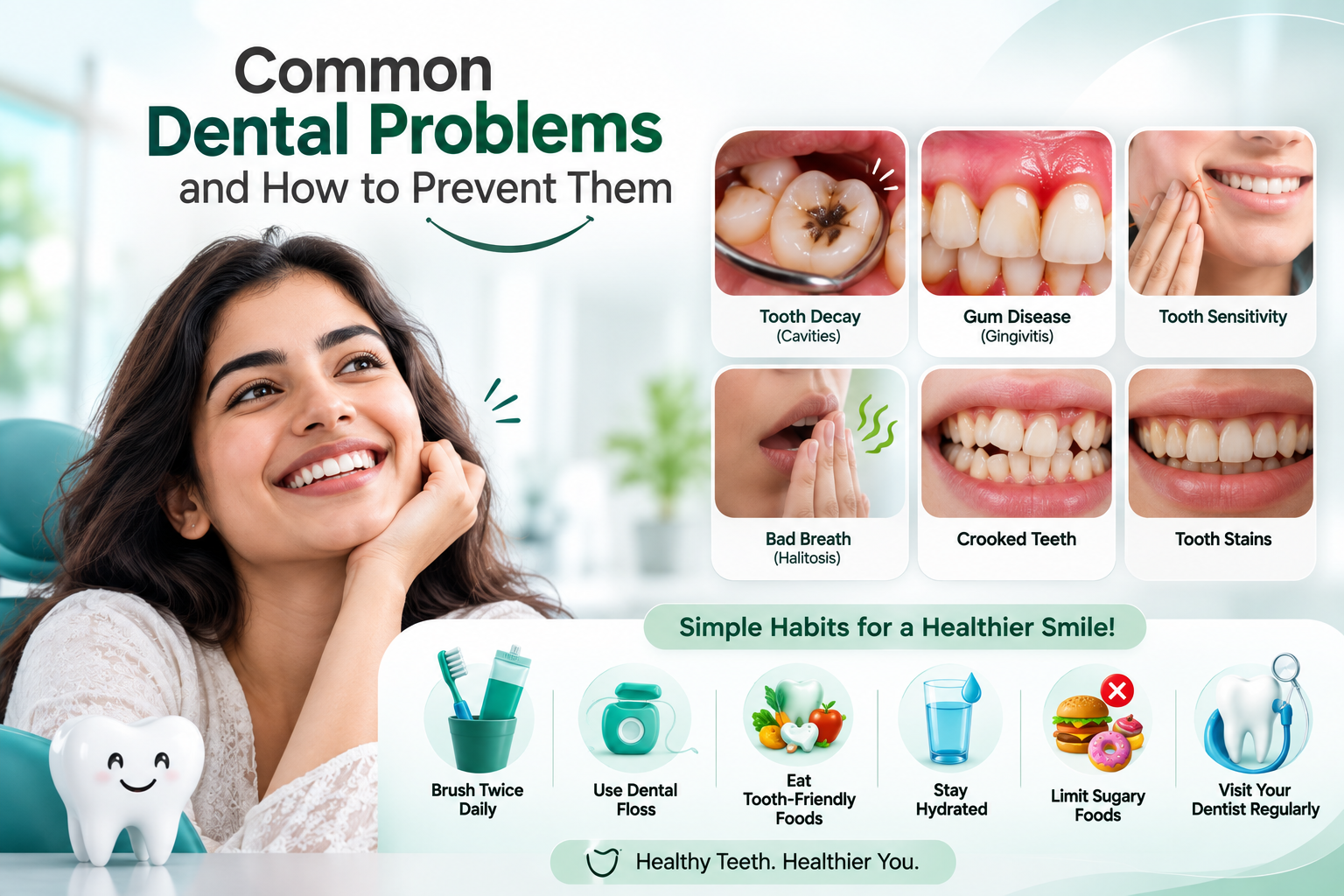
Tooth decay remains the dental problem patients underestimate most often.
Not because people do not know that sugar causes cavities. That message has been repeated for decades. The problem is that decay rarely announces itself early. A tooth can lose a considerable amount of structure before a patient feels anything unusual.
That is particularly relevant when discussing Common Dental Problems in Areekode. Patients may come in because food has started getting trapped between two teeth, because floss repeatedly tears in the same place, or because cold water suddenly feels sharper than it used to. None of these symptoms sounds dramatic. They are often the first useful warning signs.
Pain is late.
Once a cavity reaches the deeper dentine, sensitivity becomes more obvious. If bacteria reach the pulp, the problem changes completely. A filling that might once have been relatively straightforward may become a root canal treatment, crown, or occasionally an extraction.
The usual advice to “avoid sweets” is too simplistic.
Frequency matters as much as quantity. Someone who eats one dessert after lunch may expose the teeth to less repeated acid attack than someone who slowly drinks sweetened tea five or six times through the working day. Biscuits kept beside the desk, sweetened coffee, packaged juices, sticky sweets and repeated small snacks are more troublesome than patients often realise.
Kerala diets create their own practical issues. Tea with sugar several times a day is common. So are sweet bakery snacks. Certain sticky foods remain around the grooves of molars longer than expected.
Brushing twice daily with fluoride toothpaste remains sensible, but technique matters. Scrubbing aggressively for twenty seconds is not equivalent to cleaning properly for two minutes. The toothbrush needs access to the gum margins, inner surfaces and back teeth.
Do not rinse the mouth repeatedly with water immediately after brushing. Spit out the excess toothpaste and leave the remaining fluoride in contact with the teeth.
A surprisingly common mistake is brushing harder when a tooth starts looking stained. Hard brushing will not remove decay. It can wear the neck of the tooth and contribute to sensitivity.
Early cavities can sometimes be managed conservatively when detected before significant structural damage develops. Once a hole is physically established, toothpaste cannot rebuild the missing tooth.
That distinction gets blurred online.
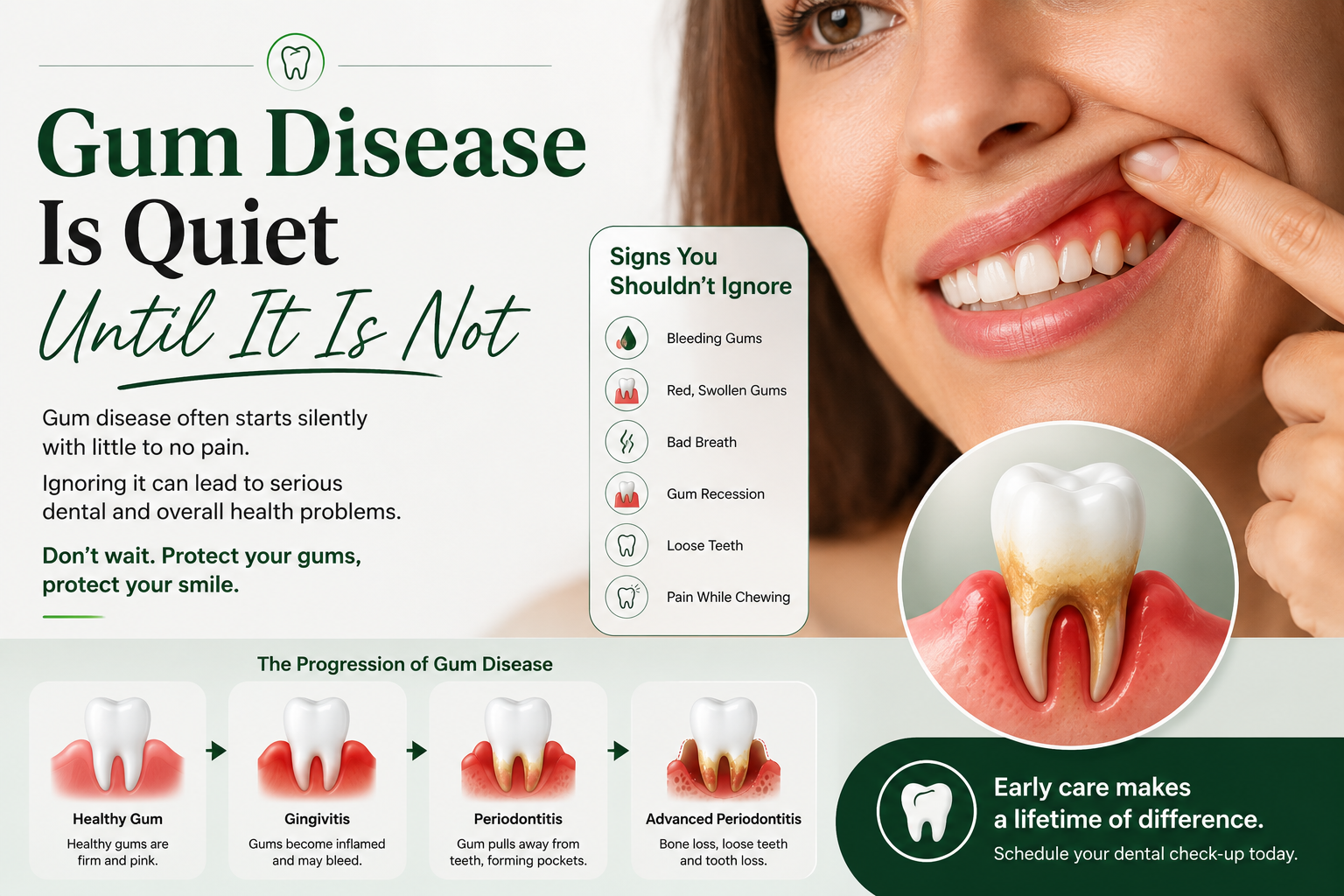
Gum Disease Is Quiet Until It Is Not
Bleeding gums are frequently dismissed.
Patients say they brushed too hard. They blame a new toothbrush. Some stop brushing the bleeding area altogether.
Usually the opposite is required.
Bleeding while brushing is commonly associated with inflammation caused by plaque sitting around the gum margin. The tissue becomes swollen and fragile, then bleeds with relatively minor contact.
Early gum inflammation, or gingivitis, is often reversible when plaque and calculus are controlled properly.
Established periodontal disease is different.
When inflammation extends into the supporting structures around the teeth, bone can gradually be lost. Teeth may begin to feel loose. Gaps can appear. The gum line may recede. Bad breath may become persistent.
There is a frustrating feature to periodontal disease: significant destruction can occur without severe pain.
That is why prevention cannot depend on symptoms.
People looking at Common Dental Problems in Areekode should not treat gum bleeding as a cosmetic nuisance. If it continues for more than several days despite careful cleaning, it deserves examination.
The toothbrush can only do so much. Plaque between tightly contacting teeth is difficult to remove without floss or an interdental cleaning aid. Which tool works best depends on the size of the spaces, existing gum loss, crowns, bridges and whether orthodontic appliances are present.
Not everyone needs the same device.
Large interdental brushes pushed aggressively through tight contacts can injure the gums. Floss snapped forcefully down between teeth can do the same. Technique matters more than buying the most expensive product.
Once calculus has hardened on the tooth surface, ordinary brushing will not remove it.
Professional scaling becomes necessary.
There is still a persistent belief that scaling weakens teeth or creates gaps. What patients sometimes notice after heavy deposits are removed is the space that was already present underneath the calculus. Removing tartar does not create periodontal bone loss. Leaving it in place allows inflammation to continue.
Smoking complicates the picture because the gums may bleed less despite significant disease. A patient can interpret the lack of bleeding as reassurance when it is not.
Diabetes, certain medications, dry mouth and poorly controlled oral hygiene can also alter gum health.
A routine appointment with a Family Dentist in Areekode is particularly useful here because gum changes are easier to judge when there are previous records, radiographs and probing measurements for comparison.
Sensitivity Is a Symptom, Not a Diagnosis
Cold water hurts.
Patients buy a sensitivity toothpaste.
Sometimes that is enough.
Sometimes it delays the diagnosis.
Dental sensitivity can come from exposed root surfaces, enamel erosion, aggressive brushing, gum recession, recently performed dental treatment, cracks, worn fillings or decay.
The location and duration of the pain matter.
A brief sharp sensation that disappears immediately after a cold drink is different from pain that continues for thirty seconds or several minutes afterwards. A tooth that becomes painful when biting deserves different attention again.
Cracks are especially difficult.
A small fracture can produce intermittent symptoms for months. The patient may be able to chew normally most days, then experience a sudden sharp pain when biting a seed, piece of meat or something unexpectedly hard.
The tooth may look perfectly normal in the mirror.
Not every crack requires a crown. Not every sensitive tooth requires root canal treatment. Equally, repeated application of desensitising toothpaste cannot stabilise a structurally weakened tooth.
The clinical examination decides that.
Teeth grinding is being noticed more often as well. Patients may not be aware that they clench during sleep. Morning jaw discomfort, flattened tooth edges, small enamel fractures, headaches around the temple and unexplained sensitivity can provide clues.
Night guards can help selected patients.
They fail when the diagnosis is wrong, when the appliance fits poorly, or when patients leave it in the bathroom after wearing it for three nights.
Acid erosion should not be confused with bacterial tooth decay either. Frequent soft drinks, citrus drinks, sports beverages and gastric reflux can gradually soften enamel.
Brushing immediately after repeated acidic exposure may increase wear because the softened surface is being mechanically scrubbed.
Water first. Allow the mouth some recovery time.
Wisdom Teeth, Crowding and Food Traps Create Problems Patients Keep Postponing
Wisdom teeth are not automatically a problem.
Removing every wisdom tooth simply because it exists makes little sense.
A fully erupted wisdom tooth that is healthy, cleanable and functioning normally may require nothing beyond routine monitoring.
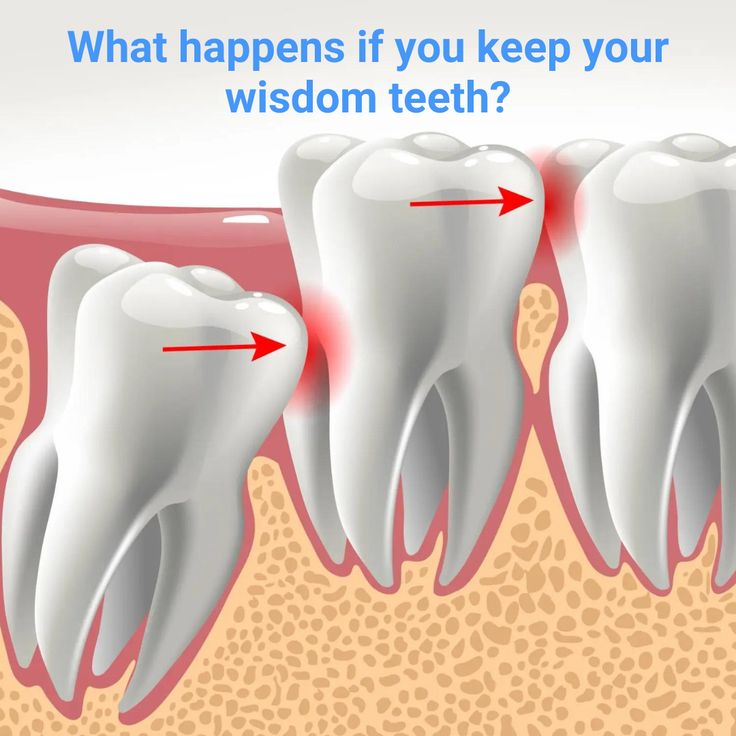
Partially erupted wisdom teeth are where trouble begins.
A flap of gum can remain over part of the tooth. Food and bacteria collect underneath it. The area becomes painful, swollen and difficult to clean. Some patients experience a bad taste or difficulty opening the mouth.
Antibiotics are sometimes prescribed during acute infections, but repeatedly treating the infection without addressing the cause is not a long-term strategy.
Extraction may eventually be sensible when episodes keep returning, when decay affects the wisdom tooth or adjacent molar, or when the tooth cannot realistically be maintained.
Radiographic assessment matters because lower wisdom teeth can lie close to important nerves.
This is not a procedure to plan from a social-media photograph.
Food trapping between ordinary molars deserves attention too. A defective filling, shifting tooth position, gum disease or an open contact can allow food to pack repeatedly into the same area.
Patients often adapt by carrying toothpicks.
That manages the consequence, not the cause.
Wooden toothpicks used aggressively can injure the gum and enlarge the space further. Persistent food impaction needs proper examination.
Crowded teeth create another problem. They are not diseased simply because they overlap, but plaque control becomes more demanding.
Orthodontic treatment can improve alignment and access for cleaning, although straight teeth are not automatically clean teeth.
Poorly maintained braces can produce remarkable amounts of plaque around brackets. White spot lesions may appear around the appliances. Straightening the teeth while damaging the enamel is a poor trade.
Anyone considering treatment at the Best Dental Clinic in Areekode should expect the dentist or orthodontist to discuss oral hygiene before and during treatment, not merely how the teeth will look afterwards.

Missing Teeth Affect More Than Appearance
A back tooth is extracted.
Nothing hurts afterwards.
The patient decides the problem is finished.
Biologically, the mouth continues adapting.
Adjacent teeth can gradually tilt towards the empty space. The opposing tooth may erupt further because it no longer meets its partner properly. Food traps can develop. Chewing may shift predominantly to the opposite side.
Not every missing tooth needs replacement.
That point deserves saying because replacement decisions should depend on position, remaining teeth, bite, bone condition, age, general health and patient priorities.
Still, ignoring a missing tooth for years can reduce later options.
Dental implants require adequate bone and healthy surrounding tissues. Bridges depend on suitable neighbouring teeth. Removable dentures have their own compromises.
An implant is not a natural tooth with a metal root.
It cannot decay in the conventional sense, but the tissues around it can become inflamed. Bone loss around implants is real. Poor plaque control, smoking and irregular maintenance increase the risk.
Patients sometimes invest heavily in implant treatment and then assume the artificial tooth requires less care than the original tooth.
It requires meticulous care.
Bridges also need cleaning underneath the artificial tooth. Ordinary brushing over the top does not clean the space underneath.
When patients ask about Common Dental Problems in Areekode, missing teeth are sometimes forgotten because they do not hurt. Clinically, they are relevant precisely because the consequences develop slowly.
Prevention begins earlier than replacement.
Saving a restorable natural tooth is usually preferable when the prognosis is reasonable. Saving a tooth with a hopeless prognosis at any cost is not.
There is a point where repeated treatment becomes more expensive, uncomfortable and less predictable than removal and replacement.
That judgement requires restraint.
Prevention Works Best When It Is Specific to the Mouth in Front of You
Generic dental advice has limits.
Brush twice daily. Reduce sugar. Floss. Visit the dentist.
All correct.
None tells us whether an individual patient has deep molar grooves, early gum loss, dry mouth, erosion, grinding, a failing crown, poorly positioned wisdom teeth or decay beginning underneath an old filling.
Good Dental Care in Areekode should be risk-based.
A teenager with healthy gums but multiple early cavities does not need the same preventive approach as a 55-year-old patient with periodontal bone loss and very little decay.
Someone with excellent oral hygiene and stable dental health may not require exactly the same appointment frequency as a patient with active gum disease.
The six-month check-up is useful as a conventional interval, not a law of biology.
Some patients should be reviewed sooner. Others may safely be seen less frequently once the dentist has assessed their risk.
Radiographs are similar.
Taking X-rays at every visit without reason is unnecessary. Refusing useful X-rays when hidden decay or bone loss is suspected is equally unhelpful.
A dental examination sees surfaces.
A radiograph can reveal areas that are impossible to inspect directly, particularly between teeth and beneath certain restorations.
Children need a different preventive approach again. Parents sometimes concentrate entirely on whether the child brushes independently. A six-year-old may happily hold a toothbrush and still miss half the teeth.
Supervision matters.
So does the eruption pattern of permanent teeth.
Deep grooves in newly erupted permanent molars can be difficult to clean. Fissure sealants may be useful for selected children at higher risk of decay.
They are not substitutes for brushing.
Diet remains the issue families underestimate. A child who brushes perfectly morning and night but drinks sweetened beverages repeatedly throughout the day is still being exposed to frequent acid attacks.
Water is boring advice.
It is also remarkably useful.
Healthy teeth do not require a special Kerala diet. Ordinary meals containing vegetables, fruit, pulses, dairy where appropriate, fish, eggs, nuts and other minimally processed foods generally present fewer dental problems than constant grazing on sticky or sugary snacks.
Whole fruit is usually preferable to repeatedly sipping fruit juice.
Cheese and unsweetened dairy products can be tooth-friendly choices for those who consume them.
Hard foods are not automatically “tooth cleaners”. Biting ice, very hard sweets, bones or nutshells can fracture teeth and restorations. Dental enamel is strong, not indestructible.
The same applies to opening packets or bottle caps with teeth.
Dentists see the result after the clever part has failed.
For most Common Dental Problems in Areekode, prevention is less about finding a perfect toothpaste and more about noticing small changes early. Bleeding. Food trapping. Persistent bad breath. A rough filling edge. A tooth becoming darker. Cold sensitivity that is increasing rather than settling. Pain when biting. A mouth ulcer that does not heal.
Those details matter.
Waiting until pain becomes severe usually reduces the number of simple options available.
FAQ
Braces vs clear aligners in Areekode: which option is right for you?
The right option depends on the type of tooth movement required, your bite, the amount of crowding or spacing, your age, oral health and how you would prefer to manage treatment day to day. An orthodontic examination can establish whether braces, aligners or either approach would suit your case.
Where can I get braces in Areekode?
Neom Dental Care provides orthodontic treatment in Areekode, including fixed braces. An orthodontic assessment is usually performed first so that the type of appliance and treatment plan can be selected according to the position of your teeth and bite.
Are clear aligners available in Areekode?
Yes. Neom Dental Care offers clear aligner treatment as part of its orthodontic services. Suitability is determined after examining the teeth, gums, bite and movements required.
Which is better for crooked teeth, braces or clear aligners?
Both can produce excellent correction when selected for the appropriate case. Mild to moderate alignment concerns may respond very well to aligners, while fixed braces provide extensive control for a wide range of orthodontic movements. The pattern of crowding matters more than how crooked the teeth appear in a photograph.
How long does orthodontic treatment take in Areekode?
Treatment time varies with the amount of correction required. Straightforward alignment can often be completed sooner than treatment involving substantial crowding, spacing or bite correction. Your orthodontist can provide a more meaningful estimate after clinical examination and diagnostic records.
What is the difference between braces and clear aligners?
Braces use brackets attached to the teeth and orthodontic wires to guide movement. Clear aligners use a sequence of removable transparent trays. Both apply controlled forces to reposition teeth, but the mechanics and daily routine are different.
Your Healthier Smile Awaits - Book Now!
Your Healthier Smile Awaits - Book Now!
The goal of our clinic is to provide the best dentistry to our patients.


Contact info
Phone : +91 7560849494
Email : [email protected]
Address : Ground floor Aysha complex ,
Opposite Panchayath stadium,
Areekode, Malappuram
Pin: 673639
Copyright © 2026. Neom Dental Care.All Right Reserved.
Copyright © 2026. Neom Dental Care.
All Right Reserved.